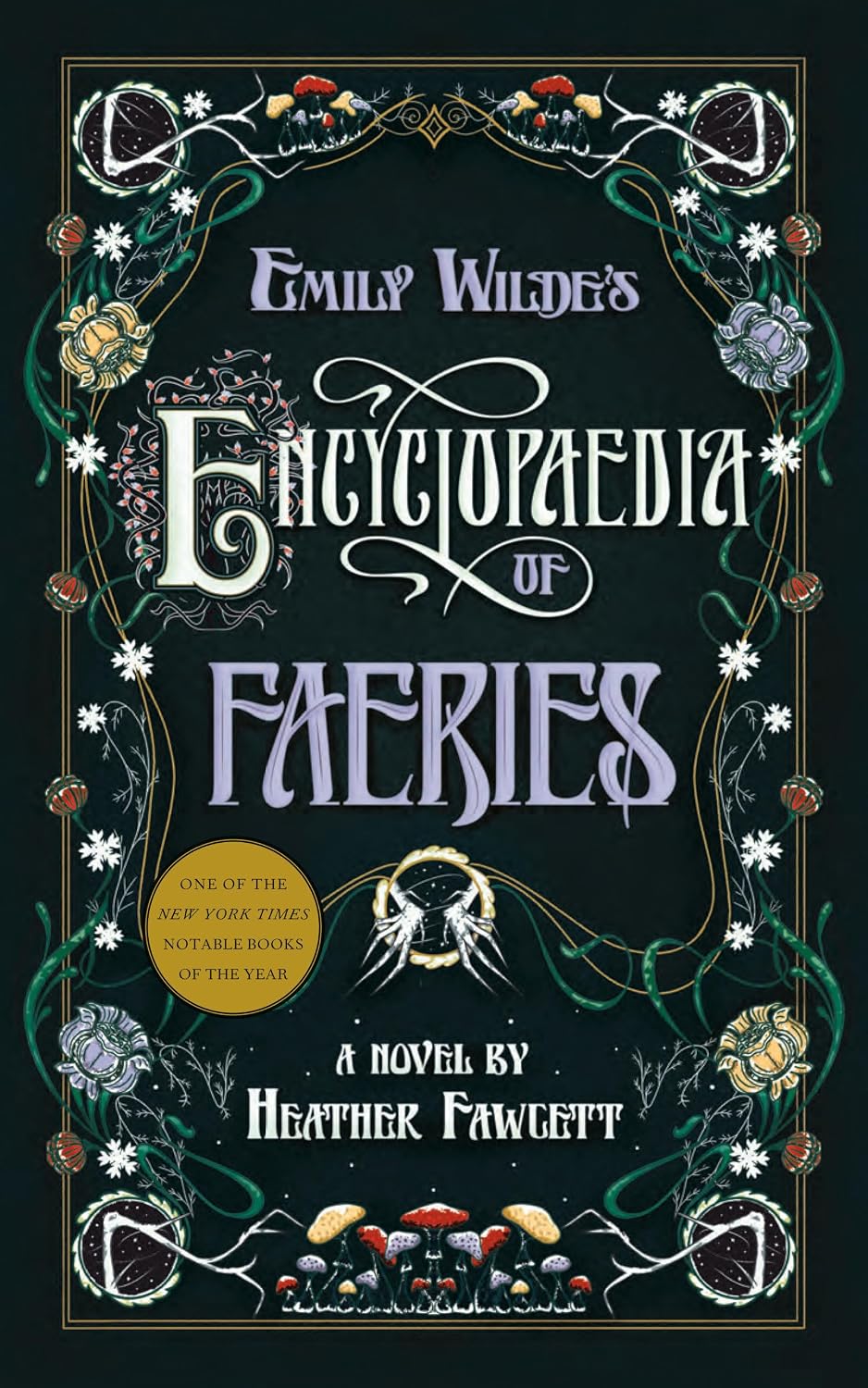
Genre: Fantasy, Cozy Fantasy, Historical Fantasy, Faerie Fiction
Series: Emily Wilde, Book 1
Spoiler-Free Synopsis
Emily Wilde is a brilliant Cambridge professor and a dedicated researcher of faeries. Her latest project takes her to the remote village of Hrafnsvik, where she hopes to document the local faerie population and make a significant contribution to the study of faerie lore. Emily is much more comfortable with her research than she is with people, which becomes a challenge when her charming and rather unconventional academic rival, Wendell Bambleby, arrives.
Between her research, the villagers, and the mysteries surrounding the faeries, Emily finds herself dealing with considerably more than she anticipated. What begins as an academic expedition becomes an adventure involving folklore, dangerous magic, and the complicated relationship between Emily and Wendell.
My Thoughts
I really wanted to love this book. The premise sounded right up my alley, and the idea of a professor researching faeries in a remote village had so much potential. Unfortunately, this ended up being a much more difficult read than I expected.
Honestly, I was close to DNFing this book around the halfway point. Looking back, I probably should have listened to that instinct. I found the pacing incredibly slow, and the writing often felt much more elaborate than it needed to be. I appreciate detailed worldbuilding, especially in fantasy, but there is a difference between creating an immersive world and making every little observation feel like a lengthy academic entry. At times, I felt like the story was getting lost in its own descriptions.
The concept of presenting the story through Emily’s field journal is interesting, and I can see how that format would appeal to readers who enjoy folklore, research notes, and detailed observations about magical creatures. For me, though, it often made the story feel repetitive. The plot took so long to gain momentum that I struggled to stay invested, and I never quite connected with the characters enough to make up for it.
Speaking of characters, Poe was easily one of my favorite parts of this book. I found myself much more interested in the faerie side of the story than in some of the central character dynamics, and Poe was a highlight whenever he appeared.
Wendell, on the other hand, was a character I had a difficult time warming up to. I understand that his personality is meant to contrast with Emily’s. He is charming, playful, and seemingly much more comfortable navigating social situations, while Emily is focused, ambitious, and far more interested in her research than in conventional social expectations. That contrast could have made for a really compelling dynamic, but I often found Wendell frustrating rather than endearing.
I also had some reservations about the way Emily’s social differences were presented. Her difficulty reading social cues and navigating interpersonal expectations made me wonder whether she was intended to be read as autistic-coded. If so, I struggled with some of the moments where Wendell teased her about these traits. Rather than always feeling like playful banter between two people who understood one another, some interactions left me wondering whether the joke was meant to be shared with Emily or made at her expense. I cannot speak to the author’s intentions, but I do think it is worth considering how these moments might land with different readers.
To be fair, I can absolutely see why this book has found its audience. The faerie folklore, academic setting, and journal format offer something different from a more action-driven fantasy novel. Readers who love atmospheric storytelling, intricate descriptions, and a slow unfolding of magical mysteries may find a lot to appreciate here. Unfortunately, those same elements made it difficult for me to stay engaged.
By the time I reached the end, I was mostly relieved to have finished. There were ideas I liked, and I can appreciate the creativity behind the world, but the execution just did not work for me. I wanted more momentum, stronger character investment, and a writing style that trusted the reader a little more.
Would I Recommend It?
This is a difficult one because I can see the appeal, even though I did not particularly enjoy my experience.
If you love cozy fantasy, faerie folklore, academic settings, and slow-burn storytelling with lots of atmospheric detail, this might be a great fit for you. If you prefer a faster-moving plot, tighter prose, and characters who pull you into the story early on, you may have a harder time with it.
For me, this was a case of loving the premise more than the actual reading experience. I wanted to be swept away by the world of faeries, but I spent too much of the book waiting for the story to get moving.
Final Rating

I am landing at a lower two rating because there are elements here that I can appreciate, even if the book did not work for me personally. The concept was promising, but the pacing, writing style, and character dynamics kept me from enjoying it as much as I had hoped.
Sometimes a book can be exactly the kind of story you think you want and still leave you feeling underwhelmed. Unfortunately, this was one of those books for me.
✨ Loved my review? You can grab your own copy of Emily Wilde’s Encyclopaedia of Faeries on Amazon!
Leave a Reply